

How To Repair A Cracked Engine Block
Unfortunately, a cracked engine block is rare just mostly a pretty tricky situation. You want to avoid it at all costs by carefully looking afterwards your car at all times.
Signs of a cracked engine cake include overheating, poor performance, oil and coolant leaks, and evidence of these two liquids mixing.
What should you do if you observe an engine block crack or suspect your vehicle has one? Will information technology brand any departure to functioning? How much does it cost to repair? And is it safe?
All these questions are answered in this article. Without further ado, let'due south delve into it.
Note: just because you notice one of these symptoms doesn't necessarily mean yous have a cracked engine block. Other underlying causes are possible (and usually more likely).
What Is An Engine Block?

You lot don't have to exist a trained auto mechanic to know that a cracked engine cake isn't good. Only how do you spot the signs?
Get-go, it's essential to know what an engine cake is.An engine block is a large piece of molded metal housing the cylinders, pistons, con-rods, and crankshaft.
Information technology's the big, heavy, chunky role of the engine.
You'll see the cylinder head when you open your automobile's hood and remove any covers. This is bolted onto the top of the main engine block and contains the valves, spark plugs, intake and frazzle inlets, and the camshaft(s) in most configurations.
The engine block is underneath this. The head gasket sits between the two to ensure a perfect seal.
Both it and the cylinder head contain channels for oil and coolant to lubricate, cool, and clean the system consistently. They pass these liquids betwixt the cake and head through advisedly engineered holes in the head gasket.
Basically, an engine cake is the sort of tough outer vanquish guarding the sensitive, advisedly-tuned process happening inside.
Why Does An Engine Block Crevice?

When we say an engine block has "cracked, " we usually refer to either the outside of the block or the channels carrying oil and coolant.
These develop hairline cracks and usually atomic number 82 to oil and coolant leaking or mixing.
Engine blocks tend to crevice as a result of our former friend, overheating. When the stress of expanding metal becomes too great for the block to handle, cracks volition inevitably grade.
Coolant and oil levels must be regularly checked and topped up, if necessary. This will keep the engine absurd, lubricated, and free from sludge, all of which prevent overheating.
Note: Some use the term "croaky engine block" to mean a cracked cylinder wall. The cylinders are technically role of the engine block, so this makes perfect sense. Yet, information technology'south more commonly referred to equally a "cracked cylinder wall". This is an even more severe trouble. However, this article volition focus mainly on cracks in the block that don't directly touch cylinder pinch.
Signs Of A Croaky Engine Cake

As mentioned, overheating is almost e'er what causes cracked engine blocks. Thankfully, overheating is straightforward to spot using the dashboard indicator estimate.
Here are several things, including overheating, for you to lookout out for.
Remember that these symptoms alone don't necessarily signal a cracked engine cake… just they might. There'due south no possible online substitute for a skilled mechanic'due south in-person diagnosis of your issue.
If yous notice these symptoms, bulldoze slowly to an car shop. If possible, telephone call a mechanic out to your home or workplace instead.
Overheating

The engine temperature gauge on your dashboard is connected to the coolant temperature sensor (CTS or ECTS). It's always crucial to keep an eye on information technology while driving.
Under normal circumstances, the needle shouldn't show a rise in temperature until the engine has time to warm up. In summer, this might exist inside a couple of minutes. In harsh winters, information technology could take ten minutes of driving fourth dimension.
About engines run at between 85 and 100 degrees Celsius (185 to 212 degrees Fahrenheit). Anything considered "besides hot" for your motor will be shown as the red range on the gauge.
If you detect the needle creeping into this expanse, your engine is overheating. Pull over and switch the machine off to allow it to cool.
The head gasket, coolant, and oil are the most common culprits for overheating engines.
Coolant Issues
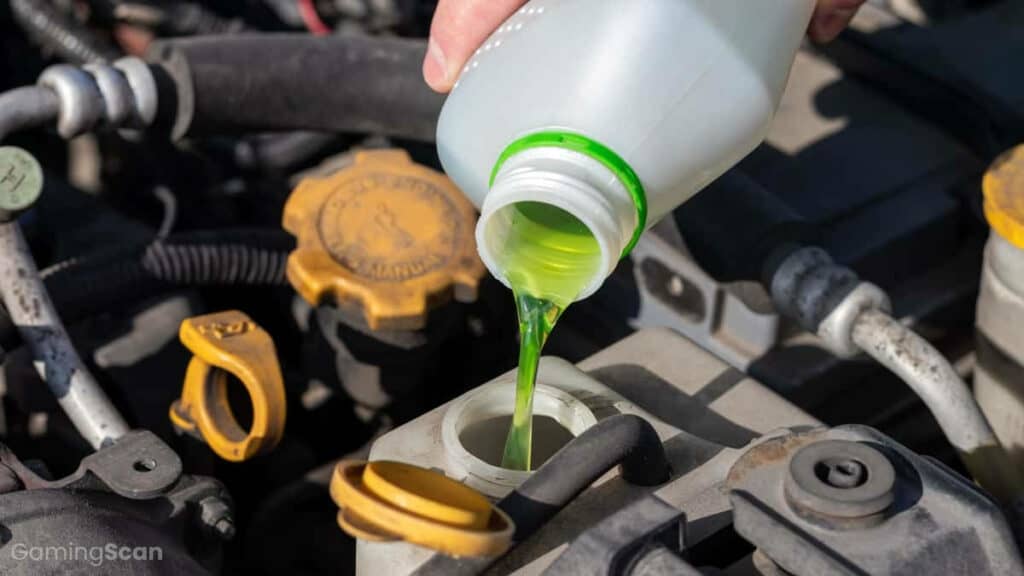
Coolant tin can leak from various points in the system: the rubber hoses, the clamps, the water pump, and the radiator are some of the most common. Leaks could too occur within the engine block or through cracks.
If the coolant level is low (check it past looking at the header tank when the engine'southward absurd), top it upwards with the right kind of coolant. When you adjacent run your motorcar, see if the temperature continues to rise. If it does, you have a bigger underlying problem.
Low Oil Levels Or Dirty Oil

Motor oil has the chore of lubricating the metal parts within the engine. This keeps them slick and prevents them from edifice up friction – in other words, oestrus.
As a effect, all the relevant parts shouldn't expand beyond their expected limits.
If the oil level is too low, the within of the engine cake volition get too hot. This volition testify on the coolant temperature gauge.
If your motor starts overheating, pull over and check the oil levels. Y'all might need a summit-upwardly. Carrying extra oil with you at all times is always a good idea.
Equally, oil becomes muddied over time equally information technology picks upwardly carbon and other particulates from the engine. Eventually, information technology'll turn into sludge, inhibiting the flow of the lubricant.
Yous can avoid this by having a regular oil and filter change – at least once per twelvemonth or 10,000 miles. Loftier mileage and fully synthetic oil help continue sludge at bay, too.
Caput Gasket Problems

When you observe overheating, it might exist coupled with a blown head gasket as well as a cracked engine cake.
If your head gasket blows, you lot'll probably notice terrible performance, a Check Engine light, Limp mode, and oil and coolant mixing. That is, you'll either see oil in the coolant or a milky-like substance in the oil. This is also a symptom of a croaky engine block (discussed below).
Oil and coolant mix because the gasket is no longer confining the liquid flow to their respective channels. They're complimentary to splash around and stop up in the wrong places equally they laissez passer between the block and the head.
A blown head gasket is likely a past-production of overheating, much like a cleft in the cake. The two tin can happen independently of each other (and usually exercise).
Nonetheless, if a mechanic finds that yous have a diddled head gasket, information technology's worth checking you don't have a croaky block either.
Oil And Coolant Mixing

If an engine block cracks in i of the channels for the oil or coolant, the ii might start to mix at that point.
It volition get progressively worse, although you might overlook any performance impact at first. This is the main difference between the symptoms of a cracked engine block and a blown caput gasket.
Oil Or Coolant Leaks Nether The Machine

You might notice a puddle – minor or large – nether the motorcar. If it's oil or coolant, that's never a practiced sign.
The oil filter or drain plug is the most likely location for an oil leak. However, it could come from anywhere with oil flow. This could include a channel within the cylinder cake.
Coolant leaks, likewise, could come from anywhere. This could potentially include the channels in the engine cake. However, it's more likely to come from a more than familiar location like the radiator or a croaky rubber hose.
Smoke From Under The Hood
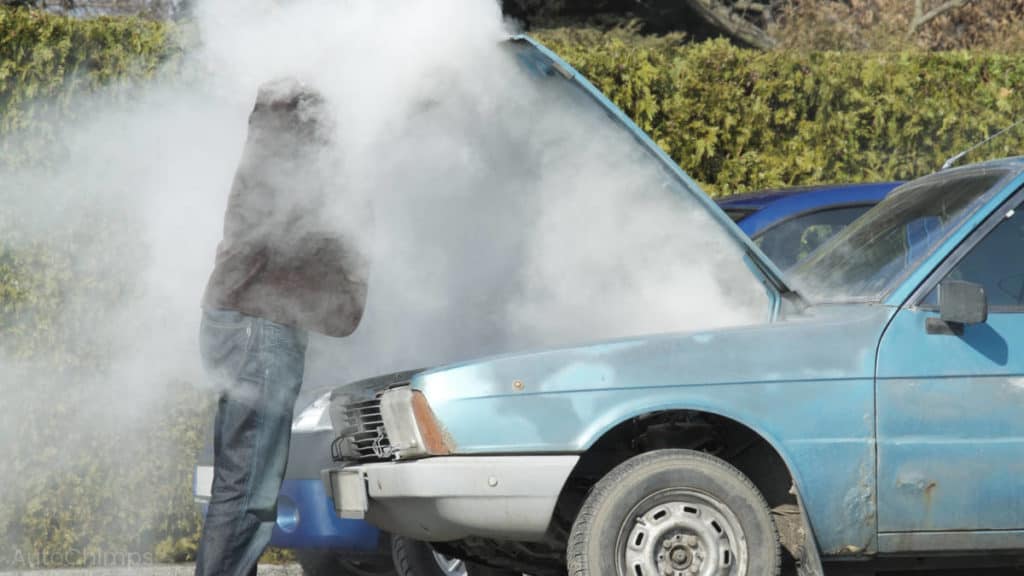
If oil leaks from a crack college up in the engine cake, it could drip onto a hot component. This would produce an oily, blue smoke.
If you notice smoke coming up from nether your hood, don't open up information technology! Switch the engine off and wait, getting your easily on an extinguisher if possible.
When the smoke eventually fades away (which it hopefully volition as the car cools without starting a burn down), bank check out the source of the trouble. You might found that it'due south oil from a croaky engine block.
Poor Operation

With overheating and low oil and coolant levels, the engine won't perform and then well. It might even get into Limp manner if the problem becomes severe enough.
For reference, a fissure in the cylinder wall (within the engine block) would as well certainly crusade poor performance, Limp mode, and a Check Engine light (among other symptoms).
This problem can be confirmed (or eliminated) with a compression test.
This article volition keep to focus on cracks in the engine cake away from the cylinders. Notwithstanding, it'south crucial to know that a croaky cylinder wall can't really be fixed. You'll need an entirely new motor or automobile. Sad.
What Should I Exercise If I Have A Cracked Engine Block?

If you detect symptoms of a cracked engine block, yous should pull over in a rubber place and telephone call for breakdown aid.
Should you observe overheating while driving, you should go on as slowly every bit possible (concentrating on keeping the engine speed depression and not applying whatsoever significant loads, such as accelerating or hills). If the temperature continues to ascension into the red zone, pull over and follow the steps higher up.
Maybe you're at home, and you've found a croaky engine block? Unfortunately, your car will probably need to be towed to a store so a mechanic can work on it thoroughly and safely.
Will A Cracked Engine Block Affect Performance?

A cracked engine cake will bear upon functioning since it'll lead to overheating. If the metal components of an engine get too hot, they'll expand, putting considerably more friction on the motor.
If this gets bad plenty, the engine could seize entirely – an irreparable issue.
Cracks in the cylinder walls will touch on performance due to low compression. When the air/fuel mixture enters the cylinder, some of it escapes through the gap. As well, the force of the spark plug igniting it won't be so potent.
These are frequently caused by too much pressure within the cylinder, stemming from issues with the injectors, valves, or retro-plumbing equipment forced induction.
In curt, if you notice signs of a cracked engine block, have your vehicle direct to a mechanic! Getting it fixed now will save yous thousands in the very well-nigh futurity.
How Much Does A Cracked Engine Block Price To Repair?

Each cracked engine cake must exist addressed on an individual ground. A mechanic probably won't be able to requite you an authentic quote until they've inspected the harm themselves.
This is considering each crack is different. Its location, size, and level of damage volition vary from block to block.
In most cases, a mechanic volition be able to weld across the crack and smooth it downward. Sometimes, they might prefer cold stitching (for tiny cracks in lower-pressure level areas) or block sealants/epoxies (for extremely small cracks).
An entirely new engine block might be needed in the most severe cases – multiple, deep, high-risk cracks in hard-to-set places.
You'll pay a mechanic around the $1,500 to $two,500 marking to repair a cracked engine block, although costs could ascent farther. These figures are fabricated up approximately equally follows (verbal costs have been left out since they vary drastically based on region and individual shop):
- Labor hours ($65 to $125 per hour):
- Engine removal and disassembly – 3-5 hours
- Investigation and diagnosis – every bit long equally information technology takes
- Welding – ane-2 hours (depending on severity)
- Testing – depends on the exam
- Reassembly and replacement – 3-v hours
- Materials:
- Welding materials – $50 to $100
Can I Drive With A Cracked Engine Cake?

If y'all accept a serious scissure in the engine cake'due south oil or coolant channels, it might however plough over and run… butyou shouldn't drive it. Every moment the engine'due south on, you risk doing further damage to your car.
A minor scissure – barely leaking at all – will be fine to drive with, although the only place you lot should be going is straight to a mechanic.
If in doubt, it'south best to be rubber and err on the side of caution. Either get in touch on with a telephone call-out mechanic or have your car towed.
A cracked cylinder wall within the engine block may impact your performance and so severely that the car struggles to start. You should never drive if this is the example. It'southward dangerous.
Endeavour to accept a preventative approach instead. Oil and filter changes, forth with keeping your coolant topped up, are 2 disquisitional steps to ensure your motor lasts as long as possible. Croaky engine blocks are no fun. Hopefully, you lot never have to find out the expensive way!
Source: https://autochimps.com/cracked-engine-block-symptoms/
0 Response to "How To Repair A Cracked Engine Block"
Post a Comment